The Best Oral Hygiene Tips for Seniors
Posted on 11/7/2026 by Singing River Dentistry - Florence |
 The best oral hygiene tips for seniors are less about doing more and more about doing things a little differently, because oral care for older adults shifts with age in ways most people aren’t warned about. Decades of brushing don’t mean the same routine still fits at 70 or 80. Medications, mobility, and the natural changes that come with longer-lived teeth all introduce new challenges that respond well to small, targeted adjustments.
We see this pattern often in our Florence, AL office. Patients who’ve taken excellent care of their teeth for a lifetime notice new problems and assume they’re slipping. Most of the time, they aren’t. The mouth is simply asking for slightly different tools and habits than it did at 30. This guide covers the senior dental care shifts that matter most, including better brushing tools, dry-mouth strategies, denture care, and the reasons regular check-ups still belong on the calendar even if all the natural teeth are gone.
On This Page
Why Oral Health Changes With Age
The mouth ages alongside the rest of the body. Several specific shifts tend to show up after 65.
Gum tissue gradually recedes, exposing more of the root surface. Root surface is covered in cementum rather than enamel and is softer, which means it decays more easily than the crown of the tooth. Cavities in older adults often appear at the gumline rather than on the chewing surfaces.
Saliva production drops as a side effect of many common medications. Blood pressure medications, antidepressants, allergy and bladder medications, and dozens of others all carry dry mouth as a known effect. Saliva is one of the mouth’s main defenses against decay, so less of it means more cavity risk.
Years of chewing and previous dental work mean older teeth often carry more fillings, crowns, and bridges that themselves need monitoring. Bonded restorations weaken at their margins over time, where bacteria can re-enter.
Hand strength and grip can also become harder to rely on. Arthritis, tremors, and shoulder limitations make a standard toothbrush stroke more difficult to execute well, particularly along the back teeth. None of these changes are signs of failure. They’re predictable shifts that the right tools and routine can offset.
Smarter Brushing and Flossing Tools
For many seniors, swapping in a few easier-to-handle tools makes a bigger difference than trying to brush harder or longer.
| • |
Electric toothbrush - A rechargeable powered brush does most of the work for you. The handle is wider and easier to hold, and the head moves at the right speed and pressure on its own. Many models also include a two-minute timer that takes the guesswork out of brushing time.
|
| • |
Water flosser - If traditional floss is hard to maneuver because of dexterity or bridges that block the floss path, a water flosser is a strong alternative. A steady stream of water flushes plaque and food debris from between teeth and below the gumline.
|
| • |
Soft-bristled brushes only - Medium and firm bristles are too aggressive on receded gums and exposed root surfaces. Soft is the right choice at every age but especially after 60.
|
| • |
Fluoride toothpaste - Daily fluoride remains the simplest and most effective defense against root-surface cavities. An alcohol-free fluoride rinse before bed adds an extra layer of protection without irritating dry tissues.
|
| • |
Interdental brushes or floss picks - Small picks or angled brushes are easier to handle than thread floss for patients with limited finger movement, and they clean the spaces just as well when used consistently. |
None of these change the goal: clean the tooth and gumline twice a day. They simply make the goal easier to hit consistently.
Managing Dry Mouth and Medication Effects
Dry mouth is one of the most under-recognized causes of new cavities in older adults. A drop in saliva means food clings longer, acid lingers, and the natural mineral-replacement process slows.
Keeping water within reach throughout the day is the simplest first step. Plain water is best, and carrying a small bottle makes sipping automatic. Chewing sugar-free gum or sucking on sugar-free lozenges containing xylitol after meals stimulates saliva, and xylitol has a small anti-cavity benefit on its own.
A humidifier at night helps anyone who breathes through the mouth while sleeping or lives in a dry indoor environment. Alcohol-based mouthwashes should be avoided since they tend to make dryness worse; look for “alcohol-free” on the label.
Reviewing your medication list with your dentist and pharmacist is also worth doing. Sometimes a small change to dose timing or an alternative drug in the same class can ease dryness, though no medication should be adjusted without your prescriber’s guidance. Patients dealing with persistent dryness benefit from a focused conversation about dry mouth treatment options, including prescription saliva substitutes and stronger fluoride applications used at home.
Caring for Dentures and Partials
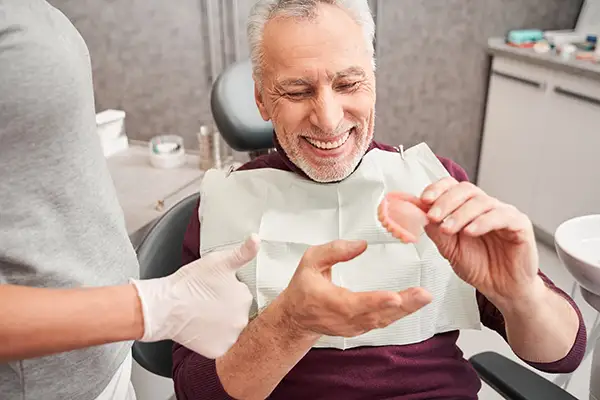 Denture care is its own distinct routine. Whether you wear full dentures or a partial, the appliance and the mouth need separate attention every day.
Dentures should come out every night. Leaving them in around the clock raises the risk of fungal infections of the underlying tissue (denture stomatitis) and accelerates bone changes in the jaw. The mouth needs daily time without the appliance to recover and stay healthy.
Daily cleaning matters too. A soft denture brush and a non-abrasive denture cleanser, not regular toothpaste, is the right combination. Regular toothpaste is too coarse and can scratch the surface, creating rough spots where bacteria collect. Rinse the dentures well before reinserting.
Soaking dentures overnight in water or a denture-soaking solution keeps them from drying out and warping. A dry denture can lose its fit within a single night.
The mouth itself shouldn’t be forgotten. Even without natural teeth, the gums, tongue, palate, and any remaining natural teeth need to be gently brushed once a day with a soft brush. This removes biofilm and helps catch tissue changes early. Partial denture wearers should pay extra attention to the natural teeth that anchor the partial, since those teeth carry an extra cleaning load and benefit from fluoride toothpaste and a consistent periodontal maintenance schedule.
Why Dental Check-Ups Still Matter
A common misunderstanding is that once natural teeth are gone, dental visits aren’t necessary. That isn’t accurate, and several reasons keep check-ups on the calendar at any age.
A regular dental exam includes an oral cancer screening, and the risk of oral cancer rises with age. Catching changes early dramatically improves outcomes. Denture fit also changes over time as the jawbone underneath continues to slowly reshape, especially in the first year after teeth are removed. A dentist can identify a denture that’s losing fit before it starts causing sore spots, loose clasps, or chewing problems.
For patients who still have most or all of their natural teeth, professional cleanings every six months are even more valuable later in life. Subtle gum changes and small root cavities are far easier to catch and treat at this stage. We see many Florence patients who assumed dental visits ended with their last natural tooth and were genuinely surprised to learn how much is still worth monitoring.
Patients with missing teeth who’ve gotten by with a partial or bridge for years may also qualify for dental implants designed for seniors, which can stabilize a loose denture or replace a single tooth without affecting neighboring teeth. Whether implants make sense for a specific patient comes down to bone density, overall health, and current medications, all of which a consultation can determine.
Building a Routine That Fits Your Life
The best senior oral hygiene routine is the one you’ll actually keep up with. If a particular tool helps you stay consistent, that tool is the right answer. Our team in Florence is glad to help you build a daily routine, troubleshoot a denture that’s shifted, or talk through whether implants are worth considering. Call us at 256-764-9955 or reach us through our home page to schedule a visit.
Frequently Asked Questions
Is it ever too late to start using an electric toothbrush?
No, an electric toothbrush is helpful at any age. Many seniors actually benefit more from switching than younger patients do, because the wider handle is easier to grip and the brush head does most of the work the wrist used to do. Start on the lowest sensitivity setting if your gums or teeth feel reactive at first.
How often should I clean my dentures if I wear them all day?
Dentures should be brushed once a day with a soft denture brush and non-abrasive cleanser and rinsed thoroughly after every meal. They should also be removed and soaked overnight to give the underlying tissues a break and keep the appliance from drying out and warping.
Why do I have new cavities now after decades of healthy teeth?
New cavities later in life are usually driven by dry mouth from medications or by gum recession that exposes the softer root surfaces. Both are common after 60 and respond well to higher-fluoride toothpaste, more frequent cleanings, and habits that boost saliva. A conversation with your dentist can pinpoint which factor is at play for you and what to adjust.
Should I still see the dentist if I have no natural teeth left?
Yes, regular dental exams still matter. Oral cancer screenings, denture-fit checks, and evaluations of the underlying jawbone are all reasons to keep visits on the calendar. Most patients without natural teeth still benefit from at least one visit per year.
Can dental implants work for someone in their 70s or 80s?
Age alone doesn’t disqualify anyone from dental implants. The bigger factors are bone density, overall health, and whether any current medications affect bone healing. Many seniors are good candidates, and even one or two implants can stabilize a loose lower denture significantly. We’re glad to do an evaluation to confirm what’s realistic in your case.
|
|

