Why Dental Cleanings Matter Even If You Brush Well
Posted on 12/10/2025 by Singing River Dentistry Madison |
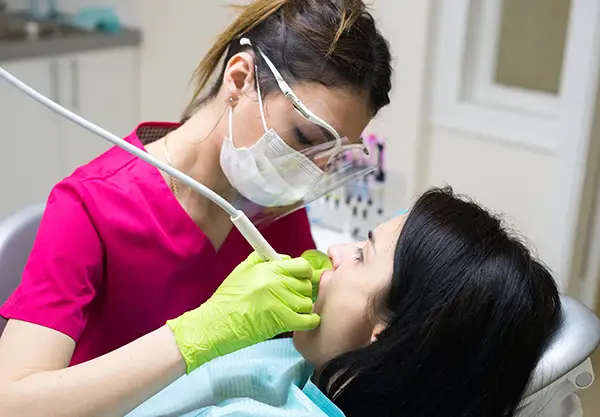 If you brush twice a day, floss, and rarely miss a session, it is fair to wonder why dental cleanings matter and whether you really still need them when your brushing is on point. Good home care does a lot, and patients who keep up with it absolutely deserve credit for the work they put in. The answer to whether cleanings are still necessary, even with excellent brushing, is yes, and the reasons go beyond removing the plaque you are already taking off at home.
This post walks through what a professional cleaning does that no toothbrush can replicate, why those things matter for your long-term oral health, and how often most patients in Madison, AL should schedule a visit. If you have wondered whether cleanings are really necessary when your home routine feels dialed in, the breakdown below should clear it up, and our team is always happy to answer specific questions at your next dental exam.
On This Page
What Home Care Can and Cannot Do
Brushing and flossing every day matter enormously. They are the difference between healthy gums and gum disease, and between low-risk and high-risk for cavities. We see the difference every time we look in the mouth of someone who is doing the work versus someone who is not.
That said, even an ideal home routine has physical limits. A toothbrush bristle cannot remove mineralized deposits. Floss cannot reach more than a millimeter or two below the gumline. And your own eyes cannot see the back surface of your back molars or the early signal of a problem starting to form. Home care prevents and slows. Professional care catches what slips through and resets the surfaces of your teeth.
Tartar Removal: The Job Brushing Cannot Do
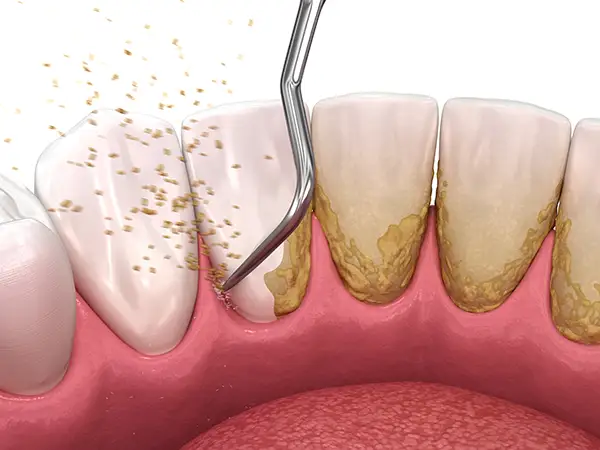 The single most important thing a dental cleaning does is remove tartar, also called calculus. Plaque is the soft, sticky film of bacteria that forms on teeth throughout the day. If it sits undisturbed for somewhere between 24 and 72 hours, it begins absorbing minerals from your saliva and hardens into tartar. Once tartar forms, no amount of brushing or flossing will remove it. The surface is no longer soft, and only the hand instruments and ultrasonic scalers used during a professional cleaning can break it off the tooth.
Tartar accumulates in predictable spots even in mouths with excellent brushing. The most common are behind the lower front teeth, where a salivary gland duct sits and constantly feeds minerals into any plaque in that area; along the gumline of the upper back molars, which are awkward to reach with a brush; and below the gumline, where neither bristles nor floss can scrape. We routinely find tartar in these spots on patients who are otherwise doing a fantastic job at home, and that tartar is the launching point for gum disease if left in place.
Cleaning Below the Gumline
Healthy gums attach to teeth with a small pocket around each tooth of about one to three millimeters. The bottom of that pocket is where periodontal disease starts. Your toothbrush bristles cannot get down there. Floss can clean the edge of the pocket but cannot scrape calcified deposits off the root surface inside it.
A hygienist's instruments can. During a routine teeth cleaning, they reach into those pockets and remove tartar that is forming below the gumline. If pockets are deeper than the healthy range, the conversation shifts toward a more thorough treatment plan, but in either case, this below-the-gumline cleaning is something only a trained professional with the right tools can perform.
Catching Problems Before They Grow
Cleanings are not just about removing what is on the teeth. They are also one of the most efficient checkpoints in healthcare for catching small problems before they become big ones.
Gingivitis is a perfect example. The earliest signs include slightly puffy gums, light bleeding when flossing, and color changes that are easy to miss in the mirror. Identified at this stage, gingivitis is fully reversible with improved hygiene and a cleaning. Left alone, the same condition can progress over months into periodontitis, which causes bone loss around the teeth that cannot be rebuilt.
The same logic applies to cavities. A white spot or a shadow on an X-ray can sometimes be reversed or treated with a small filling. The same cavity caught a year later may have grown into the nerve, leading to a root canal or a crown. Every cleaning is a chance to find these issues at the cheapest, smallest, easiest moment.
Oral Cancer Screening at Every Cleaning
Every routine cleaning at our office includes a brief oral cancer screening. We check the inside of your cheeks, the floor and roof of your mouth, your tongue, and the soft tissues at the back of the throat for any sores, color changes, lumps, or asymmetries that have appeared since your last visit.
The screening takes only a couple of minutes, but it has caught early cancers and pre-cancerous changes in patients who had no idea anything was wrong. Oral cancer is much more treatable when found early, and most people are not examining the soft tissues of their own mouth on a regular basis at home. Twice-yearly screenings provide a level of monitoring no home routine can replicate.
Polish, Fluoride, and Resetting the Surface
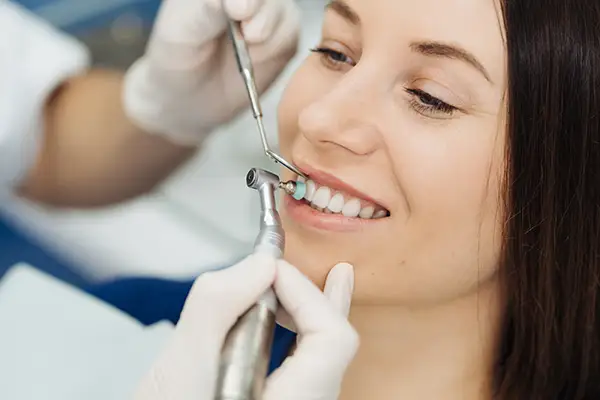 At the end of a cleaning, your hygienist polishes the teeth to remove surface stains from coffee, tea, wine, and other daily beverages. This is not the same as whitening, but it does remove the dull haze that builds up over months and restores the natural sheen.
Many patients also receive a professional fluoride treatment after their cleaning. The fluoride applied in office is much higher in concentration than what is in toothpaste, and a single application can strengthen the enamel for months. For patients at higher risk of decay, it is one of the most cost-effective preventive measures available.
How Often You Should Schedule a Cleaning
For most adults with healthy gums and no history of periodontal disease, a cleaning every six months is the standard. This schedule corresponds to how long it usually takes for new tartar to accumulate and for early changes to start showing up.
Patients with a history of gum disease, deeper pockets, diabetes, or other conditions that raise periodontal risk often benefit from a three-to-four-month schedule, which is called periodontal maintenance. The shorter interval prevents the bacteria from re-establishing in pocket areas and keeps inflammation under control. If you have ever been told you have gum disease, do not assume the six-month schedule still applies to you. Your specific interval is something to confirm with our team.
Taking the Next Step
Cleanings are the most cost-effective dentistry there is because they prevent the expensive problems before they start. If you are due for a cleaning in Madison, AL, we would love to see you. Call us at 256-653-9830 or visit our homepage to request an appointment with our team.
Frequently Asked Questions
How long does a typical dental cleaning take?
A standard cleaning for a patient with healthy gums and minimal buildup usually takes about 30 to 60 minutes, including the exam and any X-rays. If there is more tartar than usual or signs of gum inflammation, the appointment may run longer, and a deeper cleaning may be scheduled as a separate visit.
Will the cleaning be uncomfortable if I have not been in for a while?
There may be some sensitivity, especially if the gums have been inflamed and tartar has built up. Our hygienists work gently and can use a topical or local numbing option if needed. Most patients describe the experience as much easier than they expected, and the discomfort during the cleaning is far less than what they would deal with from an untreated issue.
Can I skip cleanings if my teeth feel fine?
Most dental problems do not hurt in the early stages. Gum disease, early cavities, and oral cancer are usually painless until they become advanced. Skipping cleanings means trading early, inexpensive treatment for later, more involved treatment once symptoms appear. Feeling fine is not a reliable signal that everything is fine.
Do cleanings whiten teeth?
A polish at the end of a cleaning removes surface stains and can make teeth look noticeably brighter, especially for coffee or tea drinkers. This is different from true whitening, which uses a bleaching agent to change the underlying tooth color. If you want a noticeable color change beyond stain removal, professional whitening is the right next step.
Why do my gums bleed during cleanings if I brush every day?
Bleeding during a cleaning usually points to inflammation along the gumline from plaque or tartar that has been sitting there for a while. It is the same reason gums bleed when someone starts flossing after a break. With consistent home care and regular cleanings, the inflammation calms down and the bleeding resolves. |
|

