The Best Teeth Whitening Methods for Coffee Drinkers
Posted on 3/10/2026 by Singing River Dentistry Madison |
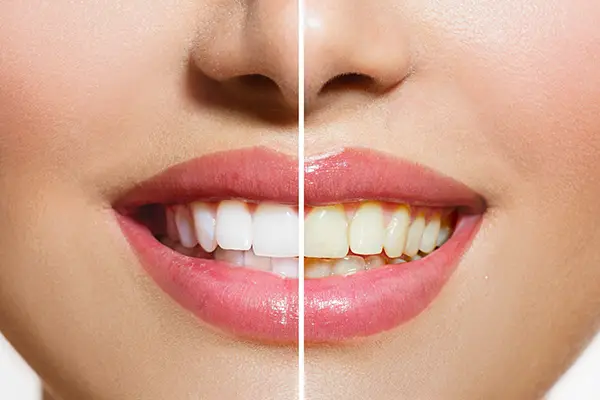 The best teeth whitening for coffee drinkers isn’t a single product, it’s a strategy: a stronger treatment to reset your shade, paired with a maintenance routine that keeps it bright without forcing you to give up your morning cup. If you live in Madison, AL and your day starts with a pour-over, a cold brew, or a drive-through latte, you’ve probably noticed that coffee leaves its mark on your enamel over time. The good news is that you don’t need to choose between a brighter smile and the habit you love.
At Singing River Dentistry in Madison, our team works with coffee drinkers every week who want a realistic plan, not a one-time fix. This guide ranks the main whitening options from most to least effective for heavy coffee staining, explains where each one fits, and covers the small daily habits that quietly do half the work. To see our dedicated treatment overview, you can also visit our whitening designed for coffee drinkers page.
On This Page
Why Coffee Stains Are So Stubborn
Coffee stains for two reasons that most whitening products only partially address. First, coffee contains tannins, pigment-carrying compounds that latch onto microscopic pits and grooves in tooth enamel. Second, coffee is acidic, and that acidity briefly softens enamel, which makes it easier for pigments to settle in. The combination is why coffee stains build up faster than, say, tea, and why they tend to be uneven across the smile.
What this means for whitening is straightforward. Surface stains can be lifted with milder products, but the deeper pigment that’s worked its way into the enamel needs a peroxide-based whitening gel to break it apart at the molecular level. That distinction is the difference between whitening that fades within a few weeks and whitening that holds for months.
In-Office Professional Whitening: The Fastest Reset
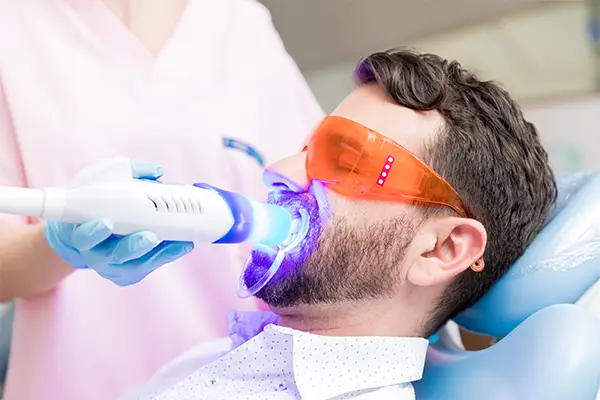 For coffee drinkers, in-office whitening is usually the most effective starting point. The peroxide concentration in professional gels is significantly higher than anything sold over the counter, and a trained team can isolate and protect the gums and lips while letting that stronger product do its job on the teeth. Most patients see a clearly visible shade change in a single visit, and many reach their goal in one or two sessions.
The reason this works so well for heavy coffee drinkers is depth. The set-in pigment that builds up over years of daily coffee responds to professional-strength gel in a way that strips and pastes simply can’t match. It also gives you a clear visual reset, a known starting point from which a simple maintenance plan can keep your smile bright. For a closer look at our professional teeth whitening process, visit our main service page.
Custom Take-Home Trays: The Coffee Drinker’s Workhorse
If in-office whitening is the reset, custom take-home trays are the long-term workhorse, and for most coffee drinkers, they’re the most practical ongoing solution. A dentist takes precise impressions of your teeth and fabricates trays that fit closely against the enamel, then dispenses a prescription-strength gel to wear for a set period each day.
The reason this format suits coffee drinkers so well is the flexibility. Many patients do an initial intensive treatment, then keep the trays on hand for periodic touch-ups, a few nights every few months. That cadence matches how coffee staining actually works, gradual buildup that needs gradual maintenance. Custom trays also distribute gel evenly along every surface of the tooth, which over-the-counter strips struggle to do, particularly around the canines and along the gumline. Whitening also pairs well with other small smile refinements, and our broader cosmetic dentistry services page covers what those look like together.
Over-the-Counter Options
Over-the-counter products have a place, but it’s a limited one for heavy coffee drinkers. Whitening strips work reasonably well for mild, recent staining, and can keep already-whitened teeth touched up between professional treatments. The gel concentration is lower than what your dentist uses, and the fit is generic, so deep set-in coffee stains often respond more slowly and less evenly.
Whitening toothpastes are even more limited. They can keep surface stains from accumulating between cleanings, but they don’t reach the deeper pigment that’s already settled into the enamel. Some are also mildly abrasive, and using them too aggressively can wear enamel over time. If you’re relying on whitening toothpaste alone to fight a serious coffee habit, you’re fighting an uphill battle. For a fuller look at what slows or accelerates staining, our resource on foods and drinks that stain enamel is a useful companion read.
The Best Long-Term Strategy: Combining Methods
For most coffee drinkers in Madison, the most realistic long-term plan combines two or three of these options in sequence:
| 1. |
Start with a reset - either an in-office treatment or an intensive round of custom-tray whitening to bring your shade up to where you want it
|
| 2. |
Maintain with periodic touch-ups - a few nights of tray use every few months, timed to your own staining pace
|
| 3. |
Layer in daily habits - the small choices below that slow new stains from forming |
This combined approach works better than any single product on its own, because it acknowledges what coffee actually does to teeth. You’re not trying to win a one-time battle, you’re managing an ongoing habit. The reset gives you the shade you want; the maintenance keeps you there with minimal effort.
Daily Habits That Limit Staining (Without Quitting Coffee)
A handful of small changes makes a real difference, and none of them require sacrificing your morning routine:
| • |
Drink your coffee in one sitting - sipping over a two-hour stretch keeps tannins in contact with enamel far longer than drinking it within 20 minutes
|
| • |
Use a straw with iced coffee - it routes the liquid past the front teeth, where staining is most visible
|
| • |
Rinse with water after - a quick swish lifts loose pigment before it can settle in
|
| • |
Wait 30 minutes before brushing - the acidity in coffee briefly softens enamel, and brushing right away can drive abrasion into a vulnerable surface
|
| • |
Book regular cleanings - professional polishing removes the surface stain layer that home brushing leaves behind |
That last point matters more than most people realize. Regular professional teeth cleanings act as a quiet maintenance layer that keeps surface stains from setting deeper, which means the whitening you’ve already paid for works harder for longer.
One detail worth flagging: whitening only changes the color of natural tooth structure. Crowns, veneers, bonding, and tooth-colored fillings won’t lighten the way enamel does. If you have visible dental work in your smile and you’re planning a significant shade change, it’s worth a conversation with your dentist first to make sure the final result will be even.
Talking With Our Madison Team
If you want a clearer plan than “try the next box of strips,” come in for a brief whitening consultation. Our team will look at the current shade of your teeth, your staining pattern, and the dental work you have in place, and then build out a realistic combination of methods. Call our Madison office at 256-653-9830, or learn more about us on the Singing River Dentistry homepage.
Frequently Asked Questions
How fast does coffee restain teeth after whitening?
It varies, but most coffee drinkers begin to see gradual color rebound within a few months if they don’t maintain their results. Daily habits and periodic touch-ups make the biggest difference in how long the brighter shade holds.
Does whitening damage tooth enamel?
Professionally administered whitening doesn’t damage enamel when used as directed. Some patients experience temporary sensitivity during or after treatment, which usually fades within a few days. Overuse of abrasive whitening toothpastes is a more common source of enamel wear than peroxide gels.
Will whitening lighten my crowns or veneers?
No. Whitening gel only changes the color of natural tooth structure. Crowns, veneers, bonding, and tooth-colored fillings keep their original shade. If you have visible dental work, your dentist can help plan a shade that everything will match well.
How long should I wait after coffee to brush my teeth?
About 30 minutes is a good rule. Coffee is acidic enough to briefly soften the outermost layer of enamel, and brushing immediately can drive abrasion into that softened surface. Rinsing with water in the meantime is a good interim step.
Can I do in-office whitening and use take-home trays at the same time?
Yes, and many patients do exactly that. The in-office treatment delivers a fast initial shade change, and the take-home trays handle ongoing maintenance and touch-ups. Our team will walk you through the right sequence and intervals for your situation. |
|

