How Oral Health Impacts Heart Health
Posted on 4/23/2026 by Singing River Dentistry Madison |
 The connection between oral health and heart health has become one of the most studied relationships in modern dentistry, with decades of research suggesting that people with gum disease tend to have a higher risk of cardiovascular events than people without it. What that connection actually means in practical terms, and just as importantly what it doesn’t mean, is worth understanding clearly.
Below, we look at what current research has actually found, the leading theories for why oral and cardiovascular health appear linked, and what the connection should change about how you care for your teeth, your gums, and your heart. The team at Singing River Dentistry in Madison, AL works with patients across every cardiovascular risk profile, and we’ve seen firsthand how a careful approach to gum health fits into a broader picture of whole-body care. For patients with a known heart condition, our approach to dental management for heart disease patients is designed to keep your dental care coordinated with the rest of your medical team.
On This Page
What the Research Actually Shows
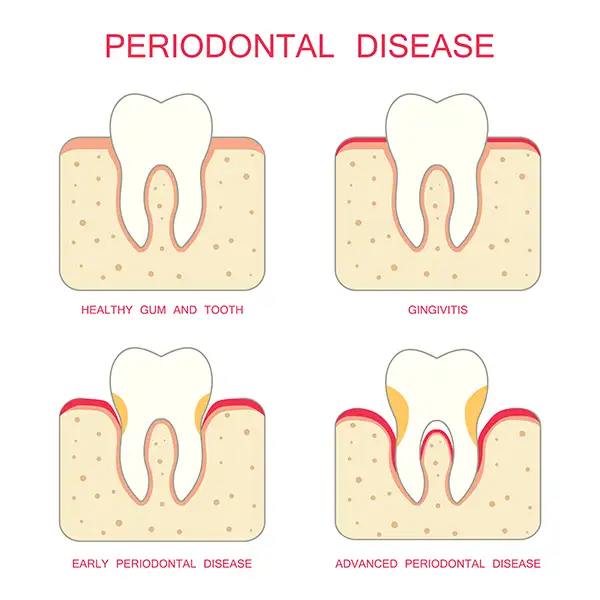 Multiple large-scale studies have looked at populations of patients with and without gum disease and tracked their cardiovascular outcomes over years and even decades. The pattern that emerges is consistent: people with periodontal disease and chronic gum infection tend to experience cardiovascular events at higher rates than people with healthy gums, and the association persists even after researchers adjust for shared risk factors like smoking, diabetes, and obesity.
That said, it’s important to be precise about what this means. The strongest research describes an association, not a proven cause-and-effect relationship. Having gum disease does not mean a heart attack is around the corner, and treating gum disease has not been definitively shown to lower cardiovascular event rates in randomized trials. What the evidence does support is that oral health and cardiovascular health appear to be connected in ways that matter, and that ignoring gum disease has implications well beyond your mouth.
Major cardiology and dental organizations, including the American Heart Association, have reviewed this evidence and concluded that good gum health is one reasonable component of comprehensive cardiovascular care, even if it is not a substitute for the cardiovascular treatments themselves.
How the Two May Be Linked
Researchers have proposed three main explanations for the association between gum disease and heart disease, and these aren’t mutually exclusive. The real answer probably involves a combination of all three.
Chronic inflammation throughout the body
Periodontal disease is a chronic, low-grade inflammatory condition. The gum tissue is constantly responding to the bacteria living in periodontal pockets, and that response generates inflammatory signals that travel through the bloodstream. Chronic systemic inflammation is also a known contributor to atherosclerosis, the buildup of plaque inside artery walls. The inflammation hypothesis proposes that the same inflammatory burden that’s damaging your gums may also contribute to vascular damage elsewhere in the body.
Oral bacteria reaching the bloodstream
Bacteria from periodontal pockets can enter the bloodstream during routine activities like chewing and brushing, and especially during dental procedures. Most healthy immune systems clear these bacteria quickly, but in some cases they may lodge in heart valves, vessel walls, or atherosclerotic plaques. Researchers have detected oral bacterial DNA inside coronary artery plaques, which supports the idea that these microorganisms can reach and possibly contribute to vascular changes.
Shared risk factors
Gum disease and heart disease share many of the same drivers: smoking, poorly controlled diabetes, a diet high in processed foods, chronic stress, and advancing age. Some of the apparent connection between the two may simply reflect that the same lifestyle factors damage both systems independently. Even when studies control for these factors statistically the connection persists, but shared risk factors still likely account for some of the overlap.
If You Have Heart Disease
 For patients in Madison with known cardiovascular conditions, the practical implications matter more than the science. A few things should change about how you approach dental care:
- Tell your dentist about every heart condition. Coronary artery disease, prior heart attack, atrial fibrillation, heart failure, and any history of heart valve problems all matter. Bring a current medication list to every visit.
- Mention any artificial valves or recent heart surgery. Certain heart valve conditions and a small number of other situations may require antibiotics before some dental procedures. Your cardiologist and dentist together can confirm whether this applies to you.
- Coordinate blood thinner timing. If you take warfarin, apixaban, rivaroxaban, or other anticoagulants, let us know before any procedure that might cause bleeding. We’ll work with your cardiologist on whether any timing adjustment is needed.
- Don’t skip routine cleanings. Patients with cardiovascular risk factors sometimes assume dental visits add risk. In most cases the opposite is true: untreated gum infection adds a bigger inflammatory burden than the cleaning itself.
Our team is comfortable working with patients who are also being managed by a cardiologist, and we communicate directly with your medical team when needed. The goal is for your dental care and your cardiovascular care to be moving in the same direction, not working against each other.
Daily Habits That Support Both
The same daily routine that protects your gums supports your cardiovascular system through a shared set of habits. There’s no special technique or specialty product required. The fundamentals do most of the work.
Brush twice a day with fluoride toothpaste, using a soft-bristled brush and gentle technique. Clean between your teeth daily, whether with floss or a water flosser. Watch for any change in your gums (redness, tenderness, bleeding, swelling, recession), and don’t dismiss those signs as normal. Schedule professional teeth cleanings at the interval your dentist recommends, which for many patients with a periodontal history is every three to four months rather than the standard six. And don’t skip routine dental exams even when nothing feels wrong. Catching gum disease in its earliest stages, when it’s still reversible, is the single most important thing you can do for the connection between your mouth and your heart.
Smoking, poorly controlled blood sugar, and a diet heavy in processed foods all damage both systems. Improvements in any of these areas reach further than either your dentist or your cardiologist sees alone.
Coordinating Your Care
The oral-cardiovascular connection isn’t something to panic about, but it isn’t something to ignore either. If it’s been a while since your last cleaning, or if you’re managing a heart condition and want a dental team that takes that context seriously, our team at Singing River Dentistry in Madison, AL is here to help. Reach us at 256-653-9830 or visit the Singing River Dentistry homepage to learn more about our team and how we work alongside your physician.
Frequently Asked Questions
Can gum disease actually cause a heart attack?
Current research describes an association between gum disease and cardiovascular events, but has not proven that gum disease directly causes heart attacks. People with gum disease experience cardiovascular events at higher rates than those without, but the relationship appears to involve several overlapping mechanisms rather than a single cause-and-effect path.
Will treating my gum disease lower my heart disease risk?
Studies have shown that periodontal treatment reduces measurable inflammation markers in the blood, which is encouraging. However, large randomized trials have not yet shown that treating gum disease directly reduces heart attack or stroke rates. Treating periodontal disease is still worthwhile for many reasons, including the broader inflammatory benefit and the local benefits to your teeth and gums.
Do I need antibiotics before a dental cleaning if I have heart disease?
Most heart conditions no longer require antibiotic prophylaxis before dental work. Current guidelines focus this recommendation on a smaller group, including patients with certain artificial heart valves, a history of infective endocarditis, and a few other specific conditions. Your dentist and cardiologist together can confirm what applies to your situation.
Should I tell my dentist about my blood thinner?
Always. Blood thinners can affect bleeding during cleanings and procedures, and your dentist needs to know what you take, the dose, and when you took it last. Most routine cleanings can proceed safely on standard blood thinner regimens, but your dental team and cardiologist may coordinate around timing for procedures that involve more bleeding.
How often should I get a dental cleaning if I have heart disease?
Many patients with cardiovascular risk factors or active periodontal disease benefit from cleanings every three to four months rather than the standard six. The right interval depends on your specific situation and is something to discuss at your next exam. Patients enrolled in ongoing periodontal care often follow a more frequent schedule than the general population. |
|

