Why You Should Never Delay a Dental Emergency
Posted on 10/9/2026 by Singing River Dentistry - Muscle Shoals |
 If you have ever wondered why not to delay a dental emergency, the short answer is that timing changes outcomes more than most people realize. A knocked-out tooth, a swelling cheek, a sharp ache that wakes you up at night – each of these has a window where treatment is straightforward and a window where it stops being straightforward. At our Muscle Shoals office, we routinely see what happens on both sides of that window, and the difference is significant. If you have ever wondered why not to delay a dental emergency, the short answer is that timing changes outcomes more than most people realize. A knocked-out tooth, a swelling cheek, a sharp ache that wakes you up at night – each of these has a window where treatment is straightforward and a window where it stops being straightforward. At our Muscle Shoals office, we routinely see what happens on both sides of that window, and the difference is significant.
Most patients delay for understandable reasons. They hope the problem will calm down on its own, they worry about cost, they feel nervous about treatment, or they assume a small issue is not actually time-sensitive. This article walks through what happens to common dental emergencies when you wait, which symptoms genuinely cannot wait, and how our team approaches urgent care without the anxiety that often keeps people from picking up the phone. If nerves are part of why you have been holding off, our anxiety free dental visits page covers how we make urgent appointments easier to face.
On This Page
Why People Put Off Dental Emergencies
Almost every patient who walks in with a serious dental emergency tells us some version of the same story. They felt something off three days ago, or a week ago, or longer. They thought it would settle down. They had a busy work week. They were not sure it counted as an emergency.
These are not unreasonable thoughts. Mild dental discomfort sometimes does settle down on its own, especially after a minor irritation or a piece of food caught between teeth. A cracked tooth can stay quiet for weeks before symptoms flare. An abscess can drain and stop hurting overnight, which feels like good news even though the underlying infection has not gone anywhere. The trouble is that the moments when a problem feels manageable are often the moments when treatment would still be straightforward.
Cost and anxiety are the other two big delays. Both are addressable, and we will come back to them. For now, the simpler point is this: the way a dental emergency feels in the moment is not always a good guide to how urgent it actually is.
What Actually Happens When You Wait
Most dental emergencies are progressive. They do not stay the same; they get worse, often quietly, in ways that change what treatment can do for you. Here is what happens with the common ones we see most often at our Muscle Shoals office.
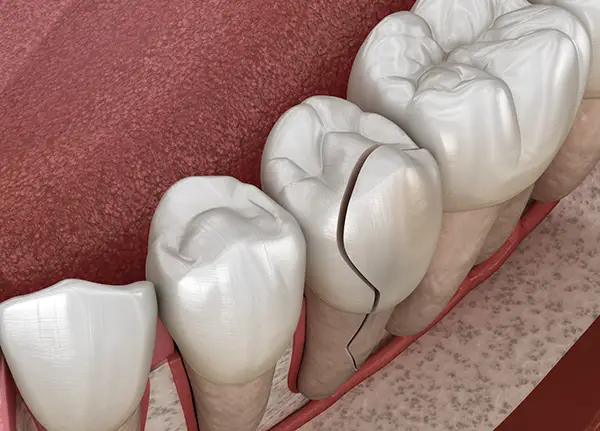 Across these scenarios, the underlying pattern is the same. The tissue or structure that is currently in trouble can usually be repaired with a smaller procedure if caught early, and a more involved one if caught late. Cracks, infections, and exposed nerves all behave this way. Across these scenarios, the underlying pattern is the same. The tissue or structure that is currently in trouble can usually be repaired with a smaller procedure if caught early, and a more involved one if caught late. Cracks, infections, and exposed nerves all behave this way.
A knocked-out tooth has a very short window
A permanent tooth that has been knocked completely out of the socket has the best chance of being successfully replanted within 30 to 60 minutes. After that window closes, the cells on the root surface begin to die, and the chance of the body accepting the tooth back drops substantially. By a few hours out, replantation is rarely successful, and the conversation shifts to a dental implant or a dental bridge to fill the space. The first 30 minutes matter more than any other interval in dentistry.
An abscess that stopped hurting has not gone away
Patients often tell us a tooth was throbbing for days and then suddenly felt better. That usually means the abscess drained, not that the infection cleared. A drained abscess is still an active infection, and the bacteria can spread into the surrounding jawbone, into the sinuses on upper teeth, or in rare but serious cases into the soft tissues of the face and neck. By the time facial swelling appears, the problem has moved from a tooth issue to a more involved one. Our dental abscess treatment page covers what care looks like at different stages.
A cracked tooth can fracture further
A crack that starts small can extend deeper into the tooth with normal chewing forces. When it reaches the nerve, the tooth often needs a root canal followed by a crown. When it extends below the gumline into the root, the tooth may not be salvageable at all, and extraction becomes the only option. A tooth that could have been saved with a crown two weeks ago can become a tooth that cannot be saved a month later.
A lost filling exposes the tooth quickly
The hole left when a filling falls out is not smooth or sealed. It collects food, traps bacteria, and lets decay restart in a tooth that is already compromised. Within weeks, what was a simple replacement filling can become deep decay reaching the nerve, which then needs root canal therapy or, in some cases, extraction. The fix is much smaller when the tooth is still intact underneath.
Gum infections cause bone loss that does not return
Unlike most other body tissues, the bone that supports your teeth does not regenerate on its own once it is lost to periodontal infection. Active gum infection eats away at that bone over months and years. Catching it early lets us stabilize what is there. Catching it late means working with a smaller foundation that can no longer be rebuilt to its original level.
Intermittent discomfort is often a worsening problem
When a tooth aches, quiets down, aches again, and quiets down again, it is rarely on a path toward healing. Most often, the nerve inside the tooth is dying in stages. By the time the discomfort becomes constant, the nerve is usually no longer viable, and a root canal is needed. Catching the cycle early sometimes lets us treat a smaller issue before the nerve is involved at all.
Symptoms That Need Same-Day Care
Not every dental issue requires an emergency visit. A mildly chipped tooth with no sharp edges, a small piece of food stuck between teeth, or a temporary cold-sensitive spot after a recent filling can often wait for a regular appointment. The following symptoms cannot.
| • |
Facial swelling – especially swelling that involves the cheek, jaw, eye area, or under the chin, which can signal that an infection is spreading.
|
| • |
Severe ache that disrupts sleep or eating – ache strong enough to wake you up or stop you from finishing a meal usually means the nerve is involved.
|
| • |
A knocked-out or fractured tooth – the first hour matters; place a knocked-out adult tooth back in the socket if possible, or in milk, and call immediately.
|
| • |
Persistent bleeding – bleeding that does not slow with steady pressure after 15 to 20 minutes needs evaluation.
|
| • |
Signs of infection – fever, a foul taste that returns after rinsing, drainage from the gum, or a hard lump on the gum tissue.
|
| • |
Trauma to the mouth or jaw – especially if a tooth feels loose, has shifted position, or the bite no longer fits together correctly. |
If you are not sure whether what you are feeling rises to that level, calling is always the right move. Our team can ask a few targeted questions over the phone and tell you whether you need to come in today, tomorrow, or at your next regular visit. A toothache diagnosis over the phone is not always conclusive, but it is enough to triage.
How Cost and Anxiety Concerns Get in the Way
Two reasons we hear most often for delay are money and nerves. Both are real, and both are easier to work through than people expect.
On cost, the math usually favors acting sooner. An exam with X-rays to find out what is happening is one of the smallest visits we do. The treatment that follows is almost always less involved and less expensive when the problem is caught early. A small filling is much less than a root canal and crown. A root canal and crown is much less than a tooth extraction with an implant. Waiting often does not save money. It changes which procedure ends up being needed.
On anxiety, the relief of a quiet office visit on your own schedule is usually larger than the relief of avoiding the visit. We talk patients through what we are doing at every step, take time with numbing, and offer sedation options for those who need them. Patients who put off care for years because of nerves almost always tell us afterward that the first visit was the hardest part, and that subsequent appointments were much easier.
Getting Help in Muscle Shoals
A small problem treated this week is almost always a smaller treatment than the same problem treated next month. If you are dealing with a dental emergency in Muscle Shoals, call our office at 256-867-0090 and we will help you figure out the next step. You can also reach Singing River Dentistry through the practice homepage for any non-urgent questions.
Frequently Asked Questions
How quickly do I need to act if a tooth gets knocked out?
The best window for successful replantation is the first 30 to 60 minutes. If possible, gently place the tooth back in the socket without scrubbing the root, or store it in milk or saliva and call our office immediately. Beyond a few hours, replantation is rarely successful.
My tooth stopped hurting on its own. Do I still need to come in?
Yes. A tooth that throbbed and then quieted down is more often a sign of a nerve that has died or an abscess that has drained, not a sign of healing. The infection underneath is still active, and it can spread. An evaluation will tell us what is actually happening.
What counts as a dental emergency versus something that can wait?
Facial swelling, severe ache that disrupts sleep or eating, a knocked-out or fractured tooth, persistent bleeding, signs of infection like fever or drainage, and trauma to the mouth or jaw all need same-day attention. A minor chip with no sensitivity, food stuck between teeth, or mild gum tenderness can usually wait for a regular appointment.
Can a dental infection actually become serious?
Yes, though it does not happen with every infection. A spreading dental infection can reach the jawbone, the sinuses on upper teeth, or in uncommon but serious cases the deeper tissues of the face and neck. Swelling that involves the eye, jaw, neck, or under the chin warrants immediate care.
What should I do at home until I can get to the office?
Rinse gently with warm salt water, use a cold compress on the outside of the cheek for swelling, take over-the-counter discomfort relief if appropriate for you, and avoid chewing on the affected side. Do not place an aspirin tablet directly on the gum, as it can burn the tissue.
Will waiting actually make treatment more expensive?
In most cases, yes. A small filling caught early is much less involved than a root canal and crown, which is in turn much less involved than an extraction and tooth replacement. Waiting usually changes which procedure ends up being necessary, not just when it happens.
|
|

