Dental Bridges vs. Partial Dentures: How to Decide
Posted on 8/25/2026 by Singing River Dentistry Madison |
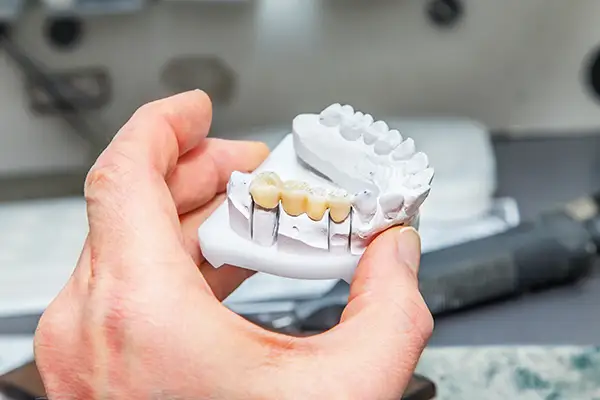 Choosing between a dental bridge vs partial denture is one of the most common decisions adults in Madison, AL face when replacing one or more missing teeth. Both options can close a visible gap, restore your bite, and let you eat and speak comfortably again. They simply take very different paths to get there. One stays in your mouth permanently; the other lifts in and out for cleaning. One leans on your neighboring teeth for support; the other uses small clasps and rests partly on your gums.
At Singing River Dentistry in Madison, we walk patients through this comparison nearly every week, and the right answer almost always comes down to a handful of practical factors: how many teeth are missing, the condition of the teeth on either side of the gap, your daily routine, and how you feel about something being permanent in your mouth. In this guide, we’ll break down how each option works, the honest pros and cons, and the questions our team uses to help you decide between a dental bridge and a partial denture.
On This Page
Fixed vs. Removable: The Core Difference
The single biggest difference between a bridge and a partial denture is how the appliance stays in your mouth. A dental bridge is cemented in place onto the teeth on either side of the gap. Once it’s placed, it stays. You brush and floss it like a natural tooth, you bite and chew on it without thinking about it, and you don’t remove it, ever.
A partial denture is removable. It has replacement teeth attached to a metal or acrylic framework that hooks onto your remaining natural teeth with small clasps. You wear it during the day, lift it out at night for cleaning, and place it in a soaking solution while you sleep. That single mechanical difference, fixed versus removable, drives almost every other pro and con that follows.
Neither option is universally better. We’ve placed both for patients with very similar gaps, and the choice came down to factors like the health of the surrounding teeth, how the patient felt about an irreversible procedure, and what fit their life. Once you understand how each one works, the right path usually becomes clearer.
How Dental Bridges Work
A traditional bridge is a row of connected crowns that spans the gap left by one or more missing teeth. The crowns on either end, called “abutments,” are cemented over the natural teeth that border the gap. The crown or crowns in the middle, called “pontics,” fill the empty space and look like teeth even though there’s no root underneath them. Together, the whole unit is bonded as a single restoration and supported by your natural teeth.
To place a bridge, our team reshapes the two neighboring teeth so that crowns can fit over them. Impressions or digital scans capture the prepared teeth, and the lab (or in some cases an in-office milling system) fabricates the bridge from porcelain, zirconia, or porcelain-fused-to-metal. You wear a temporary while it’s being made, and at your follow-up visit, the permanent bridge is cemented into place.
The advantages are real. A bridge feels stable and functions much like natural teeth: it doesn’t shift while you eat or speak, you don’t take it out, and the aesthetics are usually excellent because the crowns are color-matched to the rest of your smile. Adaptation is also fast for most patients because there’s nothing new to learn how to wear.
The trade-offs deserve honest mention. To support the bridge, we have to reshape healthy adjacent teeth, and that step is irreversible. If those teeth are otherwise untouched, that’s a real cost. Cleaning is also slightly more involved because regular floss won’t pass between the connected crowns; you’ll need a floss threader or interdental brush to clean under the pontic. A bridge also doesn’t address the bone loss that happens in the jaw beneath the missing tooth, since there’s no root replacement. With good care, most bridges last roughly ten to fifteen years before they need to be replaced. You can read more in our broader overview of restorative dentistry options.
How Partial Dentures Work
 A partial denture is a removable appliance with one or more replacement teeth set into a base. The base is usually pink acrylic to blend with your gums, often reinforced with a thin metal framework for strength. Small clasps grip the natural teeth on either side of the gap, or scattered throughout the arch, to hold the appliance in place. Newer flexible partials use a tooth-colored or gum-colored plastic instead of metal clasps, which can look more natural up front.
Getting a partial denture is less involved than getting a bridge. We take impressions or digital scans of your existing teeth and gums, the lab fabricates the appliance, and you come back for fitting and small adjustments. The neighboring teeth typically don’t need to be reshaped at all, which is a meaningful advantage if those teeth are healthy and untouched. A partial denture can also replace several missing teeth on the same arch at once, even if the gaps aren’t next to each other, which a single bridge generally can’t do.
There are real downsides too. A partial denture has to be removed for cleaning and overnight, which becomes part of your daily routine. It can feel bulky for the first few weeks until your tongue and cheeks adjust, and most patients need some practice to eat and speak confidently with it. Clasps may be slightly visible depending on placement. The appliance can shift a bit while you chew, so very sticky or hard foods take some getting used to. Partials also tend to need relines or replacement sooner than bridges, generally in the five-to-ten-year range, because your gums and underlying bone change shape over time.
How to Decide Between the Two
The decision usually starts with the teeth on either side of the gap. If those neighboring teeth are healthy, untouched, and have never needed major work, preparing them for a bridge means reshaping two good teeth. That’s a real cost, and many patients in that situation lean toward a partial denture or an implant for that reason alone. On the other hand, if the neighbor teeth already have large fillings, cracks, or older crowns that are due for replacement, a bridge can be efficient because we’re strengthening those teeth at the same time we’re closing the gap.
The number and location of the missing teeth matters too. A single missing tooth between two solid neighbors is a textbook case for a bridge or implant. Several missing teeth scattered across the same arch can usually be handled by one partial denture, where it would take multiple bridges (or implants) to do the same job. We walk through this at every consultation, and you can see the broader picture in our guide to tooth replacement options.
Your daily habits and preferences carry weight. Some patients strongly prefer something fixed that they never have to think about; for them, a bridge feels right. Others like being able to lift the appliance out, clean it thoroughly, and give their tissues a break overnight; for them, a partial denture is a comfortable fit. Hygiene habits also play a role, since both options reward consistent care but in different ways.
Cost and timeline are practical considerations. A partial denture is generally the more accessible option upfront and can usually be delivered in a shorter overall timeline. A bridge involves more chair time, more lab work, and a higher initial investment, but for many patients the long-term feel of a fixed restoration is worth it. Our team is happy to walk through what each path looks like financially during a consultation.
A Quick Word on Dental Implants
It’s worth mentioning a third option, even though it isn’t the focus of this comparison. A dental implant replaces the root of the missing tooth with a small titanium post that supports a crown on top. Because it stands on its own, it doesn’t lean on the neighboring teeth at all, and the implant root helps preserve the bone in the jaw where the missing tooth used to be. Implants take longer overall because the post needs time to integrate with the bone, and they generally involve a higher upfront investment than either bridges or partials.
For many patients who want a single-tooth solution and want to leave the adjacent teeth alone, an implant is a strong third choice worth at least discussing. You can read more in our overview of single-tooth replacement. We bring up implants here because the “bridge or partial” question sometimes deserves a wider lens. The right answer occasionally turns out to be the option no one came in asking about, and our team will let you know if your case is one of those.
Choosing What’s Right for You
Both bridges and partial dentures can give you back a complete smile, comfortable eating, and natural-feeling speech. The right choice depends on the teeth around your gap, what fits your routine, and what you want for the long term. If you’d like a straightforward conversation about which option suits your situation in Madison, our team at Singing River Dentistry is happy to help. Call us at 256-653-9830 or request an appointment online to schedule your consultation.
Frequently Asked Questions
Are dental bridges or partial dentures more comfortable to wear?
For most patients, a bridge feels more like natural teeth because it’s fixed and doesn’t shift while you eat or speak. A partial denture can feel bulky for the first few weeks while your tongue and cheeks adjust, but most people adapt and find it comfortable for daily wear. Comfort also depends on fit, which is why precise impressions and small adjustments at the fitting visit matter a great deal.
How long do dental bridges last compared to partial dentures?
Bridges typically last about ten to fifteen years with good home care and regular checkups, sometimes longer. Partial dentures often need relines or replacement in the five-to-ten-year range, mainly because your gums and underlying bone change shape over time, which affects how the appliance fits. Both options last longer when you keep up with cleanings and address small issues early.
Can I switch from a partial denture to a bridge or implant later?
Yes. One of the practical advantages of starting with a partial denture is that the neighboring teeth aren’t altered, so a bridge or implant remains a future option if you change your mind. Many patients use a partial denture as a flexible first step and revisit fixed options once they’ve had time to see how a removable appliance fits their life.
Do partial dentures damage the teeth they clip onto?
A well-fitted partial denture should not damage the teeth that hold the clasps. The clasps are designed to flex without putting harmful pressure on the tooth. Problems mostly arise when the appliance fits poorly or when home care slips, which is why routine teeth cleanings and periodic adjustments are important for anyone wearing a partial.
Is one option better for front teeth?
For a single missing front tooth, a bridge or implant is usually the more discreet and stable choice because there’s nothing visible holding it in place. Modern flexible partials with tooth-colored clasps can look surprisingly natural up front and remain a strong option, especially when several front teeth are missing or when you’d rather not alter the neighbors. Our team can show you each option side by side during a consultation. |
|

