Why Children Need Dental Sealants (and at What Age)
Posted on 7/1/2026 by Singing River Dentistry - Athens |
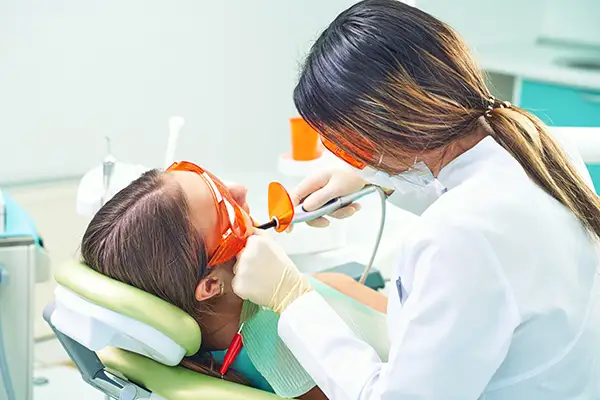 Dental sealants for children are one of the most effective preventive treatments in modern dentistry, and getting the timing right is one of the simplest, highest-impact decisions parents can make for a cavity-free childhood. Research has shown that sealants can reduce cavity risk in the protected teeth by roughly 80% in the first two years and continue providing substantial protection for years afterward. For cavity-prone kids especially, sealants are often the difference between a healthy childhood smile and repeated fillings. Dental sealants for children are one of the most effective preventive treatments in modern dentistry, and getting the timing right is one of the simplest, highest-impact decisions parents can make for a cavity-free childhood. Research has shown that sealants can reduce cavity risk in the protected teeth by roughly 80% in the first two years and continue providing substantial protection for years afterward. For cavity-prone kids especially, sealants are often the difference between a healthy childhood smile and repeated fillings.
At Singing River Dentistry in Athens, we recommend dental sealants for most kids as their permanent molars come in, often as part of routine dentistry for kids. This guide explains how sealants work, when each set of teeth should be sealed, what to expect at the appointment, and how to think through the common safety questions parents ask before saying yes.
On This Page
Why Sealants Are So Effective
The chewing surfaces of the back teeth aren’t smooth. They have deep grooves and pits that trap food particles and bacteria, and those grooves are often too narrow for toothbrush bristles to clean fully. That is especially true for children who are still developing brushing technique. The result is that the back teeth account for the large majority of cavities in childhood, even in kids whose front teeth look perfect.
Sealants solve that exact problem by smoothing over the grooves with a thin protective layer. Brushing becomes more effective because there are fewer hiding places left, and the bacteria that would otherwise camp out in those grooves lose their environment.
What Sealants Actually Are
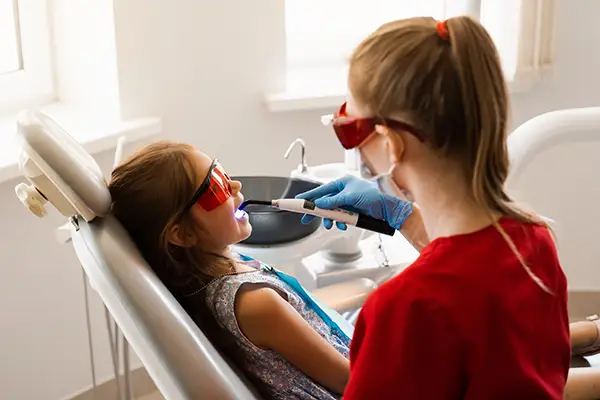 Dental sealants are thin, tooth-colored coatings made from a resin material designed to bond to enamel. The dentist paints the liquid sealant into the grooves of the back teeth, then cures it with a specialized blue light, which hardens it into a smooth protective surface. Once cured, the sealant fills in the deep pits and fissures and creates a barrier between the chewing surface and the food, drink, and bacteria the tooth meets every day. Dental sealants are thin, tooth-colored coatings made from a resin material designed to bond to enamel. The dentist paints the liquid sealant into the grooves of the back teeth, then cures it with a specialized blue light, which hardens it into a smooth protective surface. Once cured, the sealant fills in the deep pits and fissures and creates a barrier between the chewing surface and the food, drink, and bacteria the tooth meets every day.
Sealants are different from fluoride, but the two work well as a team. Fluoride strengthens the enamel itself, while sealants physically block the grooves where cavities most commonly start. Many of the children we treat get both during the same visit, and our fluoride treatment page explains how the two combine for stronger overall protection.
When to Get Sealants: Age by Age
Sealants work best when they are placed shortly after a tooth has fully erupted, before plaque has a chance to settle into the grooves. The timing windows below cover the typical eruption pattern, but every child develops a little differently, so the right window for your child is whatever an exam shows.
First Permanent Molars (Around Age 6)
The first permanent molars usually come in around age 6, behind the last baby molar. These are often called the “6-year molars” and they are the most cavity-prone teeth in childhood. They are also the most important teeth to seal because they have to last a lifetime. Most pediatric and family dentists recommend sealing them as soon as the chewing surface is fully visible above the gum.
Second Permanent Molars (Around Age 12)
The second permanent molars typically erupt around age 12, behind the 6-year molars. They have the same deep-groove anatomy and the same cavity risk, and they should generally be sealed for the same reasons. By this age, kids often have more interest in caring for their own teeth, which makes the conversation a bit easier.
Premolars and Cavity-Prone Baby Molars
Premolars (the teeth between the canines and the molars) can also be sealed when there is a clear risk, especially if the rest of the mouth shows a pattern of cavities. For cavity-prone children, sealing baby molars can also be worthwhile, particularly when there is a family history of decay. Baby teeth that are lost early can affect how permanent teeth come in, so protecting them isn’t just about avoiding a filling.
What the Sealant Visit Looks Like
Parents often expect a sealant appointment to feel like a filling appointment. It really doesn’t. There is no drilling, no numbing, and no significant discomfort. The whole procedure usually takes about 10 to 15 minutes per tooth and is something most children handle easily.
Here is the basic sequence:
| 1. |
Clean the tooth - The chewing surface is cleaned thoroughly so the sealant has a clean enamel surface to bond to.
|
| 2. |
Etch the surface - A mild etching gel is applied for a few seconds to create microscopic roughness that helps the sealant grip.
|
| 3. |
Rinse and dry - The gel is rinsed off, and the tooth is dried completely. Moisture is the biggest enemy of a good sealant bond.
|
| 4. |
Apply the sealant - The liquid sealant is painted into the grooves with a small applicator.
|
| 5. |
Cure with a blue light - A specialized light hardens the sealant in about 20 to 30 seconds.
|
| 6. |
Check the bite - The dentist makes sure the sealed surface feels normal when the child bites down, then polishes if needed. |
Kids can eat normally as soon as they leave the office. The sealant is fully cured by the time the light turns off, so there is no waiting period and no aftercare instructions beyond regular brushing and flossing.
Are Sealants Safe? Common Concerns
The two questions parents ask us most often are about BPA and about how long sealants last. Both are reasonable, and both have clear answers.
BPA and Modern Sealant Materials
Older sealant materials sometimes raised concerns about trace BPA exposure. Modern sealants used in pediatric and family dental offices are formulated with very low or undetectable BPA, and the brief exposure during placement is well below the daily exposure people get from food packaging and household products. The American Dental Association and the American Academy of Pediatric Dentistry both endorse sealants as safe and effective for children. If BPA is a concern in your family, ask which material your dentist uses; most modern offices use BPA-free or BPA-derivative-free options.
How Long Sealants Last
A well-placed sealant typically lasts 5 to 10 years, and sometimes longer. Sealants do wear over time, especially in kids who grind their teeth or chew very hard foods. The good news is that worn or chipped sealants can be touched up or replaced quickly. We check them at every dental exam and reapply when needed, which is part of why ongoing visits matter even for cavity-free kids.
Sealants for Teeth That Already Have Cavities
Sealants are a preventive treatment, not a cavity treatment. If a tooth already has decay, the dentist treats that first and then seals what is left to prevent new decay. Sealing over an existing cavity would just trap the problem underneath. This is one reason a thorough exam matters before any sealant is placed.
Adding Sealants to Your Child’s Care Plan
Sealants are one of the simplest, fastest, and highest-value preventive treatments your child can receive at the dentist, especially in those first few years after the permanent molars come in. If your child is around 6 or 12, or if you have been told they are cavity-prone, it is worth asking about sealants at their next visit. Our team at Singing River Dentistry in Athens incorporates them naturally into routine family dental care. To schedule a visit or talk through whether sealants make sense for your child, call 256-867-0090 or visit our Athens dental office online.
Frequently Asked Questions
Do dental sealants hurt?
No. There is no drilling, no numbing, and no significant discomfort. The biggest sensation kids report is the slightly odd taste of the etching gel for a few seconds. Most children find the appointment easier than a regular cleaning.
Can adults get sealants too?
Yes. Adults with deep grooves and a personal history of cavities can benefit from sealants on their molars and premolars. The same logic that applies to kids applies to anyone whose chewing surfaces are hard to clean fully.
Does my child still need to brush and floss with sealants?
Absolutely. Sealants only cover the chewing surfaces of the back teeth. The front of the teeth, the back of the teeth, and the spaces between them are still vulnerable to cavities and need normal brushing and daily flossing.
What if a sealant chips or falls off?
It happens occasionally, especially in kids who grind their teeth or chew on ice. It isn’t harmful, and the sealant can be reapplied quickly at a routine visit. That is another reason we check sealants at every exam.
Will insurance usually cover sealants for kids?
Most dental insurance plans cover sealants for children at a high level because they prevent more expensive treatment later. Coverage details vary by plan, and our team is happy to help check your benefits before the visit.
Can sealants be placed at the same visit as a cleaning?
Yes, and they often are. Combining sealants with a routine cleaning saves you a trip and uses the freshly cleaned tooth surface from the hygiene visit, which is ideal for a strong sealant bond. |
|

