The Best Mouthguards for Athletes: Custom vs. Store-Bought
Posted on 9/24/2026 by Singing River Dentistry - Athens |
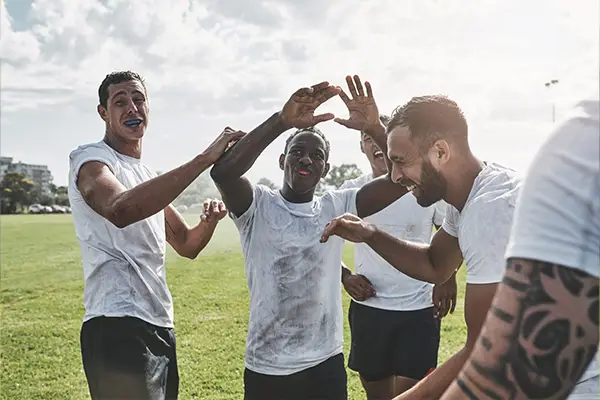 The best mouthguards for athletes are the ones that actually fit, stay in place, and absorb impact the way they were designed to, and the difference between a custom mouthguard and a store-bought one shows up the moment a real hit lands. Sports-related dental injuries account for a meaningful share of all dental trauma seen in dental offices, and a well-fitted athletic mouthguard reduces the risk of broken teeth, knocked-out teeth, lip and tongue lacerations, and may even reduce concussion risk by absorbing some of the force transmitted through the jaw. The best mouthguards for athletes are the ones that actually fit, stay in place, and absorb impact the way they were designed to, and the difference between a custom mouthguard and a store-bought one shows up the moment a real hit lands. Sports-related dental injuries account for a meaningful share of all dental trauma seen in dental offices, and a well-fitted athletic mouthguard reduces the risk of broken teeth, knocked-out teeth, lip and tongue lacerations, and may even reduce concussion risk by absorbing some of the force transmitted through the jaw.
At Singing River Dentistry in Athens, AL, we get this question from parents of athletes and from adult players alike: is a custom mouthguard really worth it, or is the one at the sporting goods store fine? This post walks through the three categories of mouthguards, where each one fits, and when custom protection stops being optional.
On This Page
Why the Mouthguard You Wear Actually Matters
Dental injuries from sports are common, predictable, and largely preventable with the right protection. The American Dental Association and multiple sports medicine groups have consistently linked properly fitted mouthguards to lower rates of tooth fractures, avulsions (knocked-out teeth), and soft tissue injuries to the lips, tongue, and cheeks. There is also growing evidence that good mouthguards may help reduce the severity of some concussions by absorbing energy that would otherwise transfer through the jaw to the skull, though the research on that is still developing.
What changes from one mouthguard to another is how much of that protective benefit you actually get. A device that doesn’t seat well against the teeth, falls out during play, or is too thin in the wrong places gives a fraction of the protection of one that fits properly. Most parents and athletes assume a mouthguard is a mouthguard. It is not. The category you choose determines whether you’re wearing real protection or close to a placebo.
The Three Categories of Mouthguards
 Mouthguards come in three meaningfully different forms. They are not equivalent products at different price points; they are different categories of protection. Mouthguards come in three meaningfully different forms. They are not equivalent products at different price points; they are different categories of protection.
Stock Mouthguards
Stock mouthguards are pre-formed plastic guards sold inexpensively at sporting goods stores, ready to wear right out of the package. Honest assessment: skip this category. They don’t fit any particular mouth well, often have to be bitten down on continuously to stay in place (which makes it harder to breathe and talk during play), and provide minimal protection because they don’t actually seat against the teeth. They are better than nothing in the strictest sense, but barely. If a stock guard is your only option for a one-off pickup game, fine. As ongoing sports protection, look at the other two categories.
Boil-and-Bite Mouthguards
Boil-and-bite mouthguards are softened in hot water, then bitten into to mold to the teeth. They cost more than stock guards and fit considerably better, but they have real limitations. They tend to be bulky, often interfere with speech and breathing, gradually lose their fit as the material compresses with use, and provide partial coverage that may leave certain teeth more exposed than others. For occasional recreational sports without much contact, a boil-and-bite is a reasonable choice. For organized contact sports or athletes wearing the same guard week after week through a season, the fit problems add up.
Custom Mouthguards From the Dentist
Custom mouthguards are fabricated from impressions or digital scans of your actual teeth, made from high-grade materials engineered for impact absorption. The advantages are substantial: a precise fit that stays in place without biting down on it, thin where comfort matters and thick where protection matters, clearer speech and breathing, full coverage of every tooth in the protected arch, significantly better energy absorption, and a useful life of multiple seasons. The trade-offs are a higher upfront investment and a couple of visits to fabricate. For most athletes who play with any regularity, the math works out clearly in favor of custom.
When Custom Goes From Nice-to-Have to Essential
For some athletes, a custom mouthguard isn’t a comfort upgrade; it’s the only mouthguard that actually does the job. The situations below are where we strongly recommend going custom rather than splitting the difference with a boil-and-bite.
| • |
Contact sports – Football, hockey, lacrosse, wrestling, rugby, MMA, and martial arts produce the kind of impacts a poorly fitted guard cannot handle. A custom guard absorbs energy that a stock or boil-and-bite would transfer straight to the teeth.
|
| • |
Athletes with braces or other orthodontic hardware – A boil-and-bite molded around braces can actually cause injury when colliding with brackets, and the fit changes every time the orthodontist adjusts the appliance. A custom guard is fabricated around the hardware and can be remade as treatment progresses.
|
| • |
Athletes with crowns, veneers, implants, or other dental work – The cost of replacing damaged dental work far exceeds the cost of a custom guard. Protecting the work you’ve already invested in is the obvious move.
|
| • |
Young athletes still growing – Losing a permanent tooth at 14 means a lifetime of replacement work, with the first replacement often years away because dental implants are typically delayed until the jaw stops growing. Solid protection during the years when adult teeth are most vulnerable is worth the investment.
|
| • |
Higher-level competitive athletes – When performance is on the line, an ill-fitting guard that has to be bitten down on or readjusted between plays is a distraction the athlete can’t afford. Custom guards stay where they belong without thought. |
Caring for Your Mouthguard and When to Replace It
A mouthguard lives in a warm, wet environment between uses, which is exactly what bacteria like. Rinse the guard with cool water before and after each use, and brush it gently with a toothbrush and cool water once a day. Skip toothpaste, which is abrasive enough to scratch the surface and create more places for bacteria to settle, and skip hot water, which can warp the material and ruin the fit. Store the guard in a ventilated case rather than sealed in a bag, and keep it out of cars, gym lockers in summer, and other hot environments.
Replacement timing depends on the athlete. Growing children often outgrow guards seasonally as their teeth, jaws, and bite change, so check the fit at the start of each season. Adults with stable bites can usually get one to two years out of a custom guard with regular use, longer if use is occasional. Watch for thinning, cracks, persistent odors that don’t clean off, and any change in how the guard seats. Custom guards can also be made in team colors and patterns, which matters more to the athlete than parents sometimes expect and is worth asking about.
Taking the Next Step
If you or your athlete is heading into a season and the current mouthguard is a boil-and-bite that doesn’t quite fit, or there’s no guard at all, a custom sports mouthguard is one of the higher-return investments in dental health you can make. Our Athens team takes impressions or digital scans, builds the guard to fit, and typically has it ready in a couple of visits. Call 256-867-0090 or reach out to our Athens office to get on the schedule.
Frequently Asked Questions
How long does a custom mouthguard last?
For adults with stable bites, a custom mouthguard typically lasts one to two years with regular use, longer with occasional use. For children and teens, the guard usually needs to be remade more often as the mouth grows and the bite changes, often at the start of each season. Watch for thinning, warping, cracks, or any change in how the guard seats.
Do I need a mouthguard for non-contact sports?
Sometimes yes. Basketball, baseball, soccer, and gymnastics all produce dental injuries despite being classified as non-contact, usually from collisions, elbows, balls to the face, or falls. A boil-and-bite often covers the risk for recreational play; competitive athletes in these sports often choose custom for fit and comfort.
Can I wear a mouthguard if I have braces?
You should, and it should generally be a custom guard. Boil-and-bite guards molded around brackets can become caught on the hardware during impact and cause injury, and they don’t adjust well between orthodontic visits. A custom guard is built around the appliance and can be adjusted or remade as treatment progresses.
What’s the difference between a sports mouthguard and a night guard?
They are designed for different forces. A night guard is built to protect against the slow, sustained grinding pressure of bruxism. A sports guard is thicker and engineered to absorb the sudden, high-energy impact of a hit. They are not interchangeable; using a night guard for sports or a sports guard for nightly grinding doesn’t give you the right protection.
What should I do if my tooth gets knocked out during a game?
Time matters. Pick the tooth up by the crown rather than the root, gently rinse it with milk or saline if it’s dirty, and try to place it back in the socket. If that isn’t possible, store it in milk or in the cheek pouch and get to a dentist within an hour. Reimplantation success drops sharply after that window, so treat a knocked-out tooth as a dental emergency and call the office right away. |
|

